
2023 SPAC Outlook

There were 348 SPACs scheduled to expire in 2023 as of February 7, 2023. 92 SPACs holding trust accounts worth over $26 billion (bn) are required to finalise mergers alone in the month of March. Blank check corporations are under a lot of pressure to finish business combinations because of impending expiration deadlines. 19 SPACs with more than $5 billion in trust have already liquidated as of February 7, 2023, as opposed to 0 liquidations during the same period in the previous year. SPACs looking for targets in the technology, media, and telecoms (TMT) sector have accounted for the majority of 2023 liquidations thus far.


Number of SPACs Looking for Targets by Sector
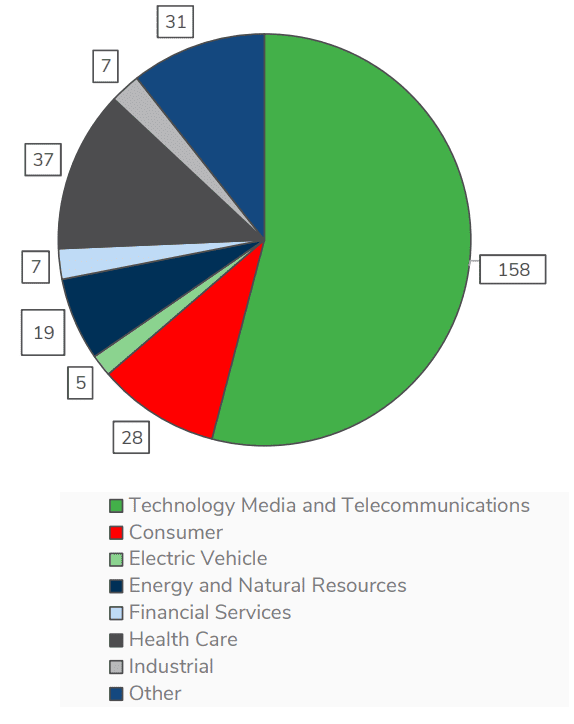


In 2023, there will still be 158 TMT-focused SPACs with trust values over $40 billion that aim to combine. SPACs will probably have more liquidations in 2023 than in 2021 and 2022 combined, given the existing status of the industry.

With a record number of liquidations in 2022 and an 85% decrease in IPOs from 2021, the SPAC market saw a dramatic downturn in 2022. From $265 million (mn) in 2021 to $156 million (mn) in 2022, the average size of an IPO decreased. In addition, there were 142 liquidations in 2022 as opposed to only one in 2021, and the average redemption rate increased by over 100%. SPACs have several obstacles to overcome, such as tighter regulations, a deteriorating stock market, and rising interest rates. These challenges make the market even more competitive, with over 380 SPACs looking for targets.

SPACs Looking to Achieve a Target Trust Amount by 2023 Expiration (mm)


2022 SPAC Market Transaction Activity
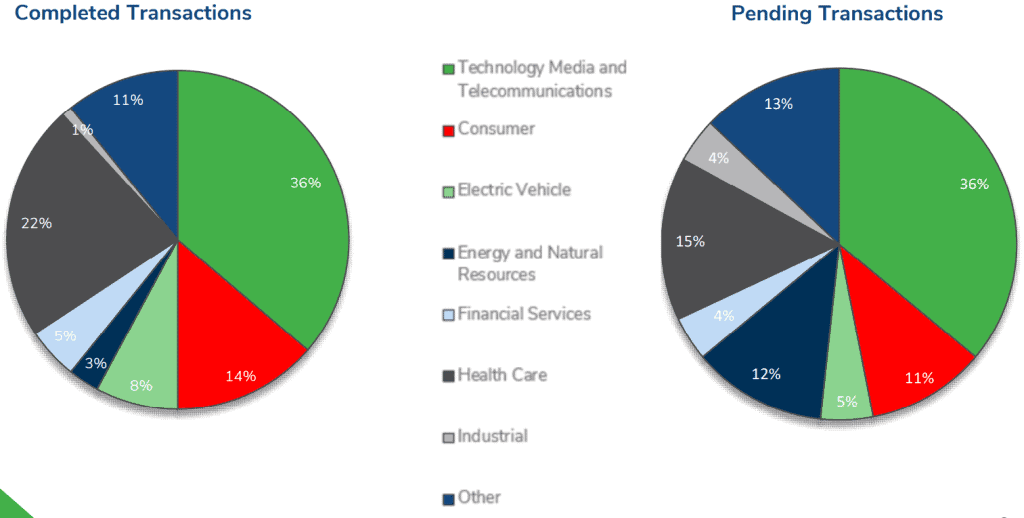
 

2022 Executive Summary: Industry-specific Median De-SPAC Share Percent Return (2009-2022)


Important note:
SPAC Consultants is not offering and/or providing investment advisory services in the sense of regulated investment advisory services as per respective EU Directives and their implementation into national law of EU Member States. Instead, SPAC Consultants offers SPAC Project Management services and consults regarding the general principles of US SPACs and their business structuring. Any investment, legal and financial advice that may become necessary for possible sponsors and investors at advanced stages will be provided by the network partners of SPAC Consultants.
Doug Ellenoff on SPAC rules proposed by SEC and the future of SPACs

SEC's Proposed New SPAC Rules and the Future of SPACs

Devoid of dialogue with the industry, SEC proposed new SPAC rules as if they have not been involved in making the rules during the last 30 years.

Doug Ellenoff on SPAC rules proposed by SEC and the future of SPACs

At the end of March 2022, the U.S. Securities Exchange Commission published its proposed set of new SPAC rules, which are still in the 60-day public comment phase. The (more or less) revised rules for Special Purpose Acquisition Companies is expected to become binding in October 2022.

In stark contrast to the SEC’s tradition discussing possible issues with the industry prior to any proposed changes of rules, the SEC under its chair Gerry Gensler chose to dash its proposal to the public. The proposed rules and SEC’s reasonings draw a picture as if the SEC has not been involved in making the rules during the last 30 years.

Fintech TV’s host Vince Molinari, in its series “The Podium SPAC Leaders”, talks with one of the most influential persons in the SPAC space since 30 years, Doug Ellenoff, partner of the law firm EGS, Ellenoff, Grossman & Schole about SEC’s current approach and the future of SPACs.

“The market is already working on commercial solutions to overcome any possible averse effects of the new rules for Special Purpose Acquisition Companies”, says Doug Ellenoff. With around 600 SPACs looking for a merger and around 10,000 companies worth to be merged with, SPACs will well continue its appeal for investors as well as for private companies with a promising business to go public.

Important note:
SPAC Consultants is not offering and/or providing investment advisory services in the sense of regulated investment advisory services as per respective EU Directives and their implementation into national law of EU Member States. Instead, SPAC Consultants offers SPAC Project Management services and consults regarding the general principles of US SPACs and their business structuring. Any investment, legal and financial advice that may become necessary for possible sponsors and investors at advanced stages will be provided by the network partners of SPAC Consultants.

SEC’s Proposed New SPAC Rules – a Blow?

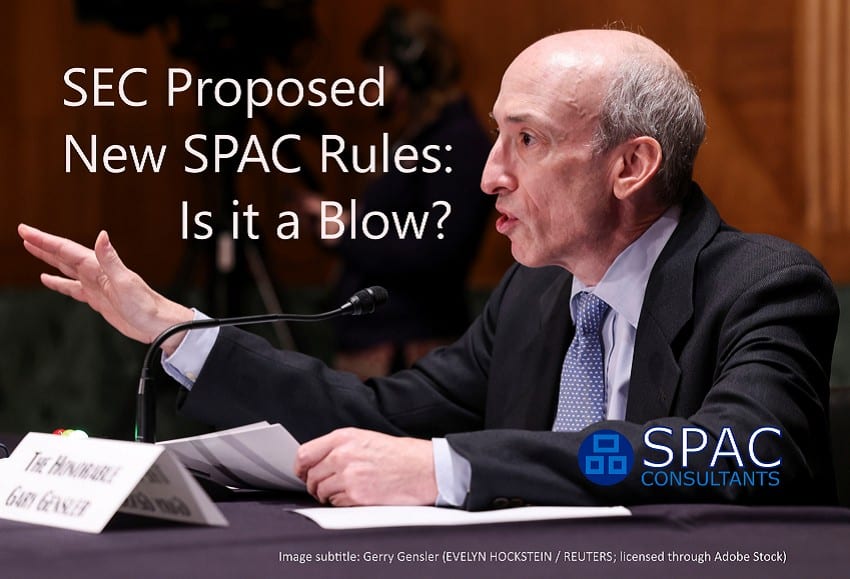
SEC's Proposed New SPAC Rules - Is it a Blow?

On March 30, 2022, during an opening meeting, the Security and Exchange Commission proposed a new set of rules for SPACs, in line with its well-known harsh rhetoric. The debuted rules mainly focus on tightening disclosures. Are the rules justified? Are they fair? What will change?

The new SPAC rules entered a public comment period for 60 days following publication of the proposing release on the SEC’s website (March 30, 2022) or 30 days following publication of the proposing release in the Federal Register, whichever period is longer.

The new SPAC rulebook, yet a proposal, has the potential to take away many of the advantages of SPACs over traditional IPOs. In very brief, the new rules aim

  • to introduce far more disclosure obligations,
  • to oblige SPACs to publish whether the de-SPAC transaction and its related financings are fair or unfair to investors,
  • to open doors for liability of each and any person directly or indirectly involved in a SPAC by abolishing the liability safe harbour rule for forward-looking statements (business forecasts),
  • to narrow the types of financial statements allowed for SPACs and their merger targets,
  • to oblige SPAC target companies to participate as co-registrant when a SPAC is filing its S-4, and
  • to stronger police conflicts of interest, fees and potential dilution.

We are not going to explain the rules in detail here, because they have been published by many entities and news channels since publication, sometimes together with evaluations. We encourage the reader to read at least the following two sources:

The 372-page paper published by SEC outlining the rules can be found here.

There is also a very good summary with some evaluations published by Marcum Bernstein & Pinchuk LLP.

Our Brief View on SEC’s New SPAC Rules Proposed

Transparency is of course welcome, and so is protection of retail investors. However, the SEC is attempting to introduce rules for SPACs that go beyond the rules applying to traditional IPOs and thus raise the question of equal treatment.

Since 2020, the market has seen some aggressive valuations as basis of SPAC merger agreements with private companies. ‘Aggressive’ valuation in this context means over-valuation, as in the cases of pre-market startups valued billions of US Dollars.

When a Special Purpose Acquisition Company acquires a pre-market startup that is not even close to successful market entry, such SPAC is actually acting as a kind of venture capitalist. It is well known that about eight of 10 startup fail at some stage, be it prior to market entry or after market entry. We believe that institutional and retail investors are not keen to see their funds risked as venture capital. Well, the sharply increasing redemption rates (redemption by IPO investors, prior to business combination) and the very low post-merger share prices of many SPACs are the result of such conduct.

The U.S. Securities and Exchange Commission plans to oblige SPACs to publish whether the de-SPAC transaction and its related financings are fair or unfair to investors. The criteria for being fair or unfair could be viewed from many different aspects and angles and would always keep a door open for litigations. If this rule remains, SPAC boards will likely arrange for third-party fairness opinion as a basis for the then required statement of fairness.

Forward-looking statements published by SPACs have often been over-optimistic, driven by enthusiastic assumptions to attract investors of a SPAC.

“In United States business law, a forward-looking statement or safe harbour statement is a statement that cannot sustain itself as merely a historical fact. A forward-looking statement predicts, projects, or uses future events as expectations or possibilities. These statements can often be misleading, as they can be mistaken for factual statements, while they are actually speculation. According to United States Code 15 Section 78u-5, a forward-looking statement may include future economic performance, such as revenues or income, plans for future operations, or use of a report written by an outside reviewer.” (Sources: 1, 2)

The Securities and Exchange Commission aims to abolish the liability safe harbour rule for forward-looking statements and putting possible liability on any person directly or indirectly involved in a SPAC. This is definitely unfair insofar as SPACs cannot be held liable for future market conditions and projections, which are the basis of evaluation of any envisaged investment, including simple currency trades.

The SEC also plans to raise the liability for public projections by SPACs to the same level of liability as applying for traditional IPOs; companies that go public through traditional IPOs rarely publish future projections, for the reason of liability. To our opinion, this proposal will become a rule as it already applies to traditional IPOs and will stop over-enthusiastic projections to lure investors into SPACs. We have always been a defender of conservative, ‘worse-case’ projection scenarios.

It was never a secret that the SEC did and does not like the generally better deal conditions for SPAC sponsors, compared to the conditions for public investors. It also argues that retail investors may struggle to understand the complicated terms of warrants or that they may be unaware when they can redeem them.

We cannot agree with that approach. SPAC sponsors are investing risk capital. In addition to the setup costs and expenses of a SPAC, which are currently around a million US Dollars and more, they do provide the entire costs and expenses of a SPAC accruing from its IPO and the post-IPO time when a SPAC searches for an appropriate acquisition target company. Those costs and expenses are massive and can easily reach USD 7 million for a SPAC with an IPO of USD 100 million or 10 million and more for a SPAC with an IPO of USD 200 – 250 million. It is important to keep in mind that while large institutional IPO investors may redeem their units and get their funds back, SPAC sponsors may lose their entire risk capital in case a SPAC is forced to be liquidated.

Providing substantial funds in form of risk capital should of course be honoured, in form of better deal terms than for public investors. Otherwise, why should SPAC sponsors wish putting risk capital? They would better buy SPAC shares alongside with public investors.

Furthermore, we cannot agree that it the terms of warrants are too complex to be understood and that retail investors may not understand when they can redeem warrants. The conditions are very clearly published in the prospectus (S-1) of every SPAC.

Underwriters of SPACs will have to face increased liability as well, if the Securities and Exchange Commission’s proposals become rules. SPAC underwriters who participate in any way in PIPE financing or in the de-SPACing (which is often the case through consulting at least) transaction will be deemed as underwriter of the de-SPAC itself. This would impose the duty of extensive due diligence related to the merger transaction, far exceeding their liability in case of traditional IPOs.

Consequently, CITI Bank already stopped any further engagement in SPACs, in fear of any possible litigation risk, as the bank does not see itself able to calculate its risk for the time being.

Concluding; we hope that U.S. entities involved in the SPAC space will provide the necessary insight and convince the SEC to take a more reasonable and balanced view and opinion during the public comment period, and that the new rulebook for SPACs will both protect retail investors at a fair level and provide a fair and supportive basis for SPACs.


Important note:
SPAC Consultants is not offering and/or providing investment advisory services in the sense of regulated investment advisory services as per respective EU Directives and their implementation into national law of EU Member States. Instead, SPAC Consultants offers SPAC Project Management services and consults regarding the general principles of US SPACs and their business structuring. Any investment, legal and financial advice that may become necessary for possible sponsors and investors at advanced stages will be provided by the network partners of SPAC Consultants.

Stefan Nolte on SPACs, expected SEC rules changes and the future of SPACs

AFCM Annual Conference Podium Discussion: "To SPAC or Not to SPAC: The Double-Edged Sword"

Our Managing Director and Senior SPAC Consultant Stefan Nolte discussing current developments and expectations on the SPAC market

AFCM Annual Conference Podium Discussion: “To SPAC or Not to SPAC: The Double-Edged Sword”

Our Managing Director and Senior SPAC Consultant Stefan Nolte has been invited as a guest speaker to the podium discussion at the Annual Conference 2022 of the Arab Federation of Capital Markets (AFCM), themed “To SPAC or Not to SPAC: The Double-Edged Sword”.

A fruitful discussion  took place on March 30, 2022, with the other podium participants, Marcus Bailey  (Associate Partner at EY), Mohamed Farid Saleh (Executive Chairman, The Egyptian Exchange), and Mostafa Kandil (Co-Founder and CEO of swvl, a ridesharing startup going public via a SPAC).

Mostafa Kandil shared precious insight into swvl’s M&A journey, while Mohammed Farid Saleh elaborated on the importance of SPAC to capitalize companies in Egypt and in Africa in general. Marcus Baily focused on the developments on the SPAC market since the last months. 

Stefan Nolte explained that the expected rules changes for SPACs will mainly have a effect on SPACs that are more on the speculative side and those SPACs that acquire pre-revenue startups, although SPACs are traditionally expected to acquire a company with an ongoing business. Despite that it is not yet clear what the new rules will provide for, serious SPACs with an excellent management team and with a resilient acquisition strategy are here to stay.


Important note:
SPAC Consultants is not offering and/or providing investment advisory services in the sense of regulated investment advisory services as per respective EU Directives and their implementation into national law of EU Member States. Instead, SPAC Consultants offers SPAC Project Management services and consults regarding the general principles of US SPACs and their business structuring. Any investment, legal and financial advice that may become necessary for possible sponsors and investors at advanced stages will be provided by the network partners of SPAC Consultants.

Financial Strategy Acquisitions SPAC

Financial Strategy Acquisitions Corp. (SPAC)

FSAC SPAC, the Financial Strategy Acquisition Corporation, intends to target B2B FinTech businesses that have strong management teams, demonstrated organic growth and differentiated products or services.

The FSAC SPAC will be focusing on established companies in North America that are growing significantly and have positive cash flow plus strong margins; FSAC’s target valuation is $500m to $2b.

FinTech is in the beginning stages of transforming the global financial and investment business. There has been a rise in the level of sophistication and interconnectivity between innovative technology and financial services providers and we expect this trend to continue and accelerate.

North America was the leading revenue contributor to the global business in 2019 and is presumed to continue its dominion in the coming years as well which can be attributed to increased adoption and development of prominent technologies in the fintech sector in the region.

The global financial technology market is expected to grow gradually and reach a market value of approximately $ 305 billion by 2025, growing at a compound annual rate of about 22.17% in the same period.

The global Foreign Exchange market is currently experiencing a healthy growth. Looking forward, the market is expected to register a CAGR of around 6% during 2020-2025.

The outstanding CEO and entire Management Team of FSAC has successfully built multi-billion dollar publicly-held financial technology companies, designed and developed cutting-edge technology platforms in the financial services sector on Wall Street.

The FSAC SPAC presentation:


SPAC Consultants: Our holistic approach to SPACs

As experienced SPAC consultants or SPAC advisors, we provide our SPAC advisory and project management services to different group of clients related to SPACs.

Our SPAC consulting and project management services are tailor-made for private equity investors who wish to invest in their own SPAC on the pre-IPO stage as so-called SPAC Sponsors, or who prefer to sponsor an existing SPAC project at its pre-IPO stage.

As SPAC consultants, we are designing and structuring SPACs, arranging for S.E.C. approval and listing at Nasdaq or NYSE, organising pre-IPO roadshows, arrange for IPOs and assist in finding acquisition targets as per a SPAC’s acquisition strategy. Our SPAC consultants and advisers are well experienced on all stages and aspects of SPACs.

If you are interested in setting up a SPAC or in participating in an existing SPAC on its pre-IPO stage, we will be happy to arrange an initial Zoom conference to get acquainted, to further elaborate on SPACs and their manifold opportunities, and to discuss with you your SPAC investment and business ideas.

Important note:
SPAC Consultants is not offering and/or providing investment advisory services in the sense of regulated investment advisory services as per respective EU Directives and their implementation into national law of EU Member States. Instead, SPAC Consultants offers SPAC Project Management services and consults regarding the general principles of US SPACs and their business structuring. Any investment, legal and financial advice that may become necessary for possible sponsors and investors at advanced stages will be provided by the network partners of SPAC Consultants.
Africa is Getting in the Focus of US SPACs

Africa is Getting in the Focus of US SPACs:

Forafric to become first African agribusiness company and first Moroccan based company to list on a U.S. exchange.

On Dec 20, 2021, Moroccan Forafric, an integrated wheat-processing company founded in 1926 and serving North Africa, and Globis Acquisition Corp., a special purpose acquisition company listed on Nasdaq, announced that they have entered into a definitive business combination agreement.

Africa SPACs

Globis Acquisition Corp. (Nasdaq:GLAQ), a Special Purpose Acquisition Company (SPAC) founded by Globis Capital Advisors, a New York-based investment advisory firm founded in 2001, raised $115 million (including over-allotment) during its IPO on Dec 11, 2020. In its prospectus (S-1), Globis did not limit itself to any geographical region or any industry, but stipulated its focus on a target business that will benefit from economic globalization, particularly as it affects emerging markets.

In its acquisition strategy, Globis focused on companies that are ” sector leaders in their product category or have the potential to be dominant competitors in their sectors”, and that have “experienced management teams and corporate governance, reporting, and control systems ready to comply with the requirements of a public listing”.

Forafric is a Moroccan milling company founded in 1926, which developed into an industrial group specializing in wheat processing with twelve production sites, maintaining distribution of their products in 45 countries, with a strong focus on Africa. Forafic also produces pasta and animal nutrition products and owns two leading brands, Tria and MayMouna. In the beginning of 2021, the company commenced its acquisition strategy, acquiring milling capacity in Mali, Burkina Faso, and Niger.

Based on the Press Release by Globis, the enterprise value of the combined company is valued at approximately $300 million; its common stock is expected to be listed on the Nasdaq under the ticker symbol ‘AFRI.’ Upon the closing of the transaction, the parties intend that Globis will change its jurisdiction of incorporation to Gibraltar and be renamed Forafric Global PLC.

Africa is yet an Almost White Area on the Map of SPACs

Other that the above transaction, there are only a very few SPAC activities related to Africa.

PHP Ventures SPAC

PHP Ventures Acquisition Corp., a Special Purpose Acquisition Company (SPAC) led by CEO Marcus Choo Yeow Ngoh, who previously served as the Director of Edmark Promotions HongKong Co. Ltd., where he successfully opened up new businesses in the Middle East and Africa, focuses on consumer-facing companies with a significant Africa presence or a compelling Africa potential. PHP has raised USD 57.5 million (including over-allotment) through its Nasdaq IPO on Aug 16, 2021.

TB SA SPAC

On March 23, 2021, the SPAC TB SA Acquisition Corp raised USD 200 million at its IPO on Nasdaq. TB SA is affiliated to TowerBrook Capital Partners L.P., intends to identify a potential initial business combination target with a focus on African companies that promote ESG principles. The SPAC’s management team has strong-rooted ties to South Africa with key contacts across relevant industries and within the Sub-Saharan region generally.

African Gold SPAC

African Gold Acquisition Corporation, a SPAC that raised USD 414 million on NYSE, on Feb 26, 2021, is focusing on the gold mining industry in Africa. This SPAC has been founded by the South African entrepreneur and founder of the pan-African investment platform InvestAfrica, Robert Hersov.

Renergen Limited

The first Africa-related SPAC ever was Renergen Limited, a South African investments company focused on the alternative and renewable energy sectors in South Africa and sub-Saharan Africa. It was the first African SPAC, listed on the Johannesburg Stock Exchange (JSE) in June 2015.

Africa and SPACs

There are several reasons why Africa is not much on the map of SPACs, yet. One reason is the lack of private companies of a certain size in Africa, and that would provide an over-average growth potential. Many of the companies that do have a certain size and do have an over-average growth potential are not IPO-ready yet.

Most of the stock exchanges in Africa do not do not provide any SPAC-specific regulations, or regulations that would support SPAC listings.

It is also worth to mention that Africa-rooted SPACs might get more interest by African investors. Eghosa Omoigui, managing partner of EchoVC Partners, an early-stage VC firm focused on sub-Saharan Africa, said that that the continent could do well with more SPACs from indigenous personalities like Thiam while waiting for those from foreign entities. This will build more excitement on the continent because in most cases, it isn’t the target that people usually get enthusiastic about but the vehicle itself (source: TechCrunch).

“Sometimes you realize that it’s not really the startups that need to be hot and exciting; it is the SPAC sponsor. That’s what people are hopping on the bandwagon for”, Omoigui continued.

However, SPAC listings on African stock exchanges might bear a disadvantage. Due to the small size and liquidity of markets, shareholders that wish to sell a good part of their shares after merger might not find enough buyers.

Well, that is a clear encouragement for African investors to set up SPACs or to participate in SPACs as sponsors.

Important note:
SPAC Consultants is not offering and/or providing investment advisory services in the sense of regulated investment advisory services as per respective EU Directives and their implementation into national law of EU Member States. Instead, SPAC Consultants offers SPAC Project Management services and consults regarding the general principles of US SPACs and their business structuring. Any investment, legal and financial advice that may become necessary for possible sponsors and investors at advanced stages will be provided by the network partners of SPAC Consultants.
New SPAC Rules in the United Kingdom

New UK SPAC Rules in Force

The new SPAC rules by FCA provide for a SPAC listing environment similar to Wall Street, encouraging SPAC listings on the London Stock Exchange with better investor protections and annulling previous trade suspension of a SPAC after acquisition announcement.

Mr Boris Johnson announced in March 2021 an overhaul of UK SPAC rules and formed a taskforce. They have done a very good job.

London Stock Exchange New SPAC Rules 2021

The new UK SPAC rules came into effect three days ago, on August 10th, 2021, much earlier than previously expected, in October 2021.

The recently published new UK SPAC rules also came with a nice surprise. The FCA proposed a minimum IPO size threshold of £200m but then reduced the threshold to £100m. Smaller SPACs can still be listed, but they will not be able to benefit from the new beneficial rules.

We are highly welcoming the new UK SPAC rules and believe that they will put the London Stock Exchange on the preferred global map for SPAC listings.

What is new for SPACs listing on the LSE?

The new rules for SPACs listed in the United Kingdom create an environment similar to the U.S., providing both flexibility and enhanced protection for investors:

  • IPO Shareholders now need to approve a proposed business combination.
  • IPO Shareholders now have a redemption right which they may execute in case they do not like a proposed acquisition. The redemption option must be declared in the SPAC prospectus.
  • Conflict of interest of SPAC board members has been resolved by abstaining from voting in case of a conflict of interest. Conflict of interest must be published by the SPAC board.
  • Disclosure obligations regarding SPAC IPO and a proposed acquisition have been enhanced.
  • Period to complete an acquisition has been fixed at two years, with an option of 12-month extension if IPO shareholder approve, and additional six months in case a transaction is already well advanced.
  • The minimum IPO size to benefit from the new SPAC rules is £100 million.
  • IPO proceeds must be “ring-fenced”, i.e. must be held on a third-party trust account.

UK SPACs versus SPACs in continental Europe

The main advantage of UK SPAC listings versus listings in Frankfurt, Amsterdam, Paris or other stock exchanges is the positive interest rate in the United Kingdom.

IPO proceeds held on trust account in the European Union suffer from negative interest rates. When a shareholder opts to redeem its outstanding shares, a SPAC is obliged to pay back that shareholders funds provided on IPO. The difference stemming from negative interest rate is to be covered by the SPAC, which means that the SPAC sponsors need to provide additional funds.

SPACs listed in the United Kingdom will not face this problem, at least for now and expectedly for foreseeable future as well.

SPACs aiming to list in the UK will also benefit from a deeper pool of capital across a global investor base in London, compared with other stock exchanges in continental Europe.

Read the official statement of the London Stock Exchange.


Important note:
SPAC Consultants is not offering and/or providing investment advisory services in the sense of regulated investment advisory services as per respective EU Directives and their implementation into national law of EU Member States. Instead, SPAC Consultants offers SPAC Project Management services and consults regarding the general principles of US SPACs and their business structuring. Any investment, legal and financial advice that may become necessary for possible sponsors and investors at advanced stages will be provided by the network partners of SPAC Consultants.

Deal Analysis: Queens Gambit SPAC To Acquire SWVL

The Queen's Gambit SPAC agreed to acquire Swvl, the electrical public transport platform based in Dubai.

Queen’s Gambit Growth Capital (GMBT), a SPAC listed on NASDAQ, announced during the last days of July 2021 that it has entered into a definite combination agreement with the Dubai-based but Cairo-born mobility tech company Swvl.

The SPAC valuates Swvl at $1,445 billion; Swvl will receive $405 million operation capital to realise its expansion plans.

In this article, we will briefly analyse the financial mechanics of the proposed deal, which still needs to be approved by the IPO shareholders of Queen’s Gambit.

Queen’s Gambit’s IPO and Acquisition Strategy

Special Purpose Acquisition Company Queen’s Gambit Growth Capital’s planned to raise $300 million during its IPO. Its Book Running Manager Barclays used its option for over-allotment and upsized the IPO to $345 million. The SPAC floated its IPO on 20th of January 2021.

With $345 million in trust, a SPAC typically looks for acquisition target companies with a valuation of $1.035 to $1.725 billion.

In its S-1 filed with the SEC, Queen’s Gambit Growth Capital did not provide a concrete direction of its acquisition strategy, saying “We intend to focus our search on a target business that provides solutions promoting sustainable development, economic growth and prosperity.”

The SPAC’s sponsor is Queen’s Gambit Holdings LLC, which is controlled by Ms. Grace and owned by members of its management team and board, its Advisory Board, an affiliate of Agility and certain other individuals.

Queen’s Gambit’s Proposed Business Combination and Transaction

Queen’s Gambit valuated Swvl at $1.133 billion, which is 2.8x its 2023E gross revenue.

Queen’s Gambit is holding in its trust account $345 million cash (proceeds from IPO with over-allotment).

PIPE investors will provide additional $100 million, bringing the total cash available to $445 million.

After Swvl has been merged into Queens’s Gambit SPAC, it will receive the total of available cash, being $ 445 million.

Of this amount, $40 million will be used to cover the expenses and fee to close the transaction and list on NASDAQ, remaining operation capital for Swvl will be $405 million.

The above figures show that the shareholders of Swvl will be 100% compensated with a share swap, no cash pay-outs to the shareholders from IPO proceeds). Abstaining from any cash-outs for themselves from the available cash, Swvl’s shareholders fully support maximum operation capital for to company, thus showing their commitment to stay and to further develop the company’s business as soon as possible.

Queen’s Gambit Growth Capital will hold 6% of the shares of the post-merger company.
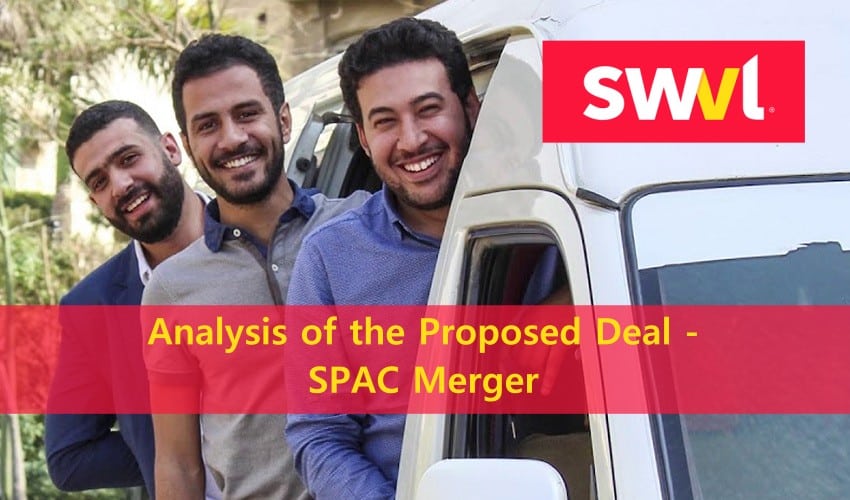
SWVL SPAC merger with Queen's Gambit

Who Are the Shareholders of Swvl and How Will They Benefit?

The founders of Swvl are well-known meanwhile, as they appeared on public media everywhere. But who are the other shareholders of the company?

The shareholders of Swvl comprise the following group:

  • Founders
  • Employees
  • Investors

Swvl’s Founders

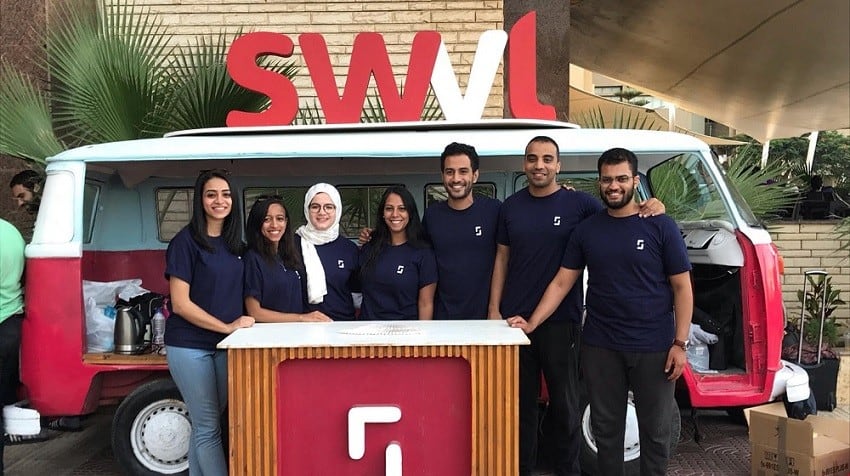
Swvl was co-founded by Mostafa Kandil in early 2017 when he was just 24 years old, together with Mahmoud Nouh and Ahmed Sabbah, who were even younger. They set up their company putting together their personal savings, $30,000. Mostafa is the CEO of the company. As Mostafa is the biggest individual shareholder in the company, assumingly – details are not known yet – he will hold at least several 10 million dollars in form of equity, if the proposed deal gets approved by the IPO investors.

Mahmoud left the company in October 2019 but kept his shares. It is not known yet whether his shares will be acquired during the acquisition or if he remains as a shareholder.

Ahmed left the company in 2021, after more than 4 years. He is expected to have his fair share.

Swvl’s Employees

Swvl knows how to motivate its employees. Many of them, together with executives, have been given stock options. Provided that they execute their stock options when the company goes public, they will earn millions.

Founder and CEO Mostafa Kandil wrote in a public post announcing the planned SPAC merger: “Today, Swvl hasn’t only created a monumental everlasting impact on the region, but also a life-changing impact for everyone within. We will soon have USD 18 millionaires, AED 95 millionaires, and EGP 203 millionaires of our colleagues, which I am sure will soon start the world’s Swvl Alumni Mafia.”

Swvl’s Investors

Back in Spring 2017, Swvl had a difficult start; nobody believed in their project and mission, possible investors approached by the founders did not show interest. But in July 2017 Swvl received a cheque of $500,000 from Careem, a Dubai-based subsidiary of the American company Uber. This was the kickstart for Swvl, and nobody could hold them back.

In return, Careem received 20-25% of Swvl’s shares, the exact figure is not known. Less than a year later, Careem was bought out by Series A investors. Had Careem held its shares, it could have generated a return on investment of over 700 times, post SPAC merger.

Series A investors were mainly funds from the region. During the next four years, Swvl raised more that $100 million from funds, VCs and other investors, who are now all shareholders and will benefit from the upcoming merger; namely:

  • Beco Capital
  • Vostok New Ventures
  • Silicon Badia & Digame
  • Arzan VC, Raed Ventures, Oman Technology Fund, and Sawari Ventures
  • Other institutional investors
  • Individual investors

Beco Capital

Beco Capital, co-founded by Dany Farha and based in Dubai, provides growth capital and hands-on operational support for early-stage technology companies, with the vision is to reinvent the Middle East through innovation and tech. Beco Capital has invested in more than 23 companies in the MENA region.

Beco Capital did co-lead the Series A funding round in February 2018 and invested itself. The Series A round provided Swvl with $8 million fresh funds. Beco Capital did also co-lead Swvl’s later funding rounds. It was mainly thanks to Dany Farha’s efforts that Swvl was able to raise $100 million, through several funding rounds. Dany is a board member of Swvl. Other than the unicorn Swvl, Beco Capital backed two other unicorns in the region at its early stages: Careem and Kitopi.

Considering it pivotal role, Beco Capital is expected to own a significant stake in the company and thus will provide its limited partners with a very heathy return on investment.

Vostok New Ventures

Vostok New Ventures, a Swedish Venture Capital firm, did co-lead the Series B-2 round in June 2019 which raised $42 million, and also invested itself. Vostok New Ventures continued investing during later funding rounds an now owns 12.5% of Swvl’s shares. Their shares will probably have a value of over $110 million after the merger. However, their ROI will be lower than Beco’s return, as they entered the company at a higher valuation that Beco.

Silicon Badia & Digame

Silicon Badia and Digame Investment did co-lead the Series A and B-1 funding rounds, together with Beco Capital. Silicon Badia is based in New York and Amman, while Digame is based in London, with its investment management located in Nigeria, and focuses on the transformative power of technology in Africa. Details of Silicon Badia’s and Digame’s shareholding in the company are not known at the moment. As both of them invested in the early funding rounds, they can expect an excellent return on investment after Swvl’s merger with the Queen’s Gambit Growth Capital SPAC.

Arzan VC, Raed Ventures, Oman Technology Fund, and Sawari Ventures

Arzan Venture Capital, based in Dubai, and the Oman Technology Fund invested in Swvl’s Series A and, B-1 and B-2 rounds. Raed Ventures, which partners with exceptional founders building breakthrough companies and creating scalable impact in MENA region, based in Riyadh, participated in both the Series A and B-1 funding rounds. Sawari Ventures, from the home country of Swvl’s founders, Egypt, is investing in technology companies, across the ICT, hardware, education, healthcare, cleantech and fintech spheres, in the MENA region. Sawari ventures invested in the Series B-1 and Series B-2 rounds.

These four investors do not hold substantial portions of Swvl’s shares but will still enjoy a good return on investment and gain reputation from holding a listed unicorn in their portfolios.

Other institutional investors

As Swvl did not announce all if its funding rounds, not all investors are known. Some of them are Alcazar Capital, Blu Stone Management, Dash Ventures, Endeavor Catalyst, MSA Capital, and Autotech Capital.

Individual investors

There is also a number of individual investors, of which only a few are public. One of them is the founder of Property Finder in Dubai, Michael Lahyani, who invested in Series B-2.

Who is Queen’s Gambit?

Queen’s Gambit Growth Capital has been set up in December 2020 by Victoria Grace, who is founding partner of Colle Capital Partners I, LP (2015), an early-stage technology venture fund in the U.S., which has made investments in a diverse portfolio of 48 companies across the logistics, healthcare, financial technology, marketplace and emerging technology sectors.  Prior to that, among other positions, Victoria Grace was a partner at Wall Street Technology Partners LP, a mid-stage technology fund, from November 2000 to February 2014, and a director of Dresdner Kleinwort Wasserstein Private Equity Group from November 2000 to October 2004. Grace serves as the CEO of Queen’s Gambit. Grace co-founded, co-managed and served as President of Work It, Mom! LLC, a network site for professional moms with an advertising revenue model from 2007 until its merger with another content company in 2012

When creating Queen’s Gambit Growth Capital, Grace surrounded herself with a female team, all of them with a proven track record in their own industry.

Anastasia Nyrkovskaya, CFO of Queen’s Gambit, currently acts as the CFO of Fortune Media (USA) Corporation, where she is responsible of finance and accounting, board relations, corporate development, and multiple new initiatives, and a post-acquisition transition. Prior to Fortune Media, Anastasia served as Chief Financial Officer and Treasurer of Birchbox Inc, and as Chief Financial Officer of XpresSpa Group, Inc. (NASDAQ: XSPA), leading finance and accounting functions, including SEC reporting and debt raises in the public markets.

The Board of Nominee Directors comprises;

Jennifer Barbetta (COO at Starwood Capital Group, Artisan Partners Asset Management Inc., with focus on corporate governance; previously Partner and Managing Director at Goldman Sachs, among others);

Cheryl Martin, Ph.D (Founder and Principal of Harwich Partners, LLC, focus on designing and implementing solutions for complex problems, especially those related to energy, sustainability and technology adoption; previously member of the Managing Board of the World Economic Forum in Geneva, Switzerland, where she was responsible for a range of industry and innovation initiatives, previously Cheryl served as Acting Director of the U.S. Department of Energy’s Advanced Research Projects Agency–Energy (“ARPA-E”), among others);

Jill Putman (currently CFO at Jamf Holding Corp. (NASDAQ: JAMF) since 2014; previously CFO of Kroll Ontrack, Inc., a private-equity owned e-discovery firm, previously Divisional CFO and Vice President of Finance at Lifetouch Inc Jill also served as as Vice President of Finance at McAfee Corp., among other positions);

Jeannine Sargent (currently serves in investment and advisory roles that are focused on industries ranging from AI-enabled solutions to energy and sustainability, incl. Breakthrough Energy Ventures, Generation Investment Management LLP, and Katalyst Ventures Management LLC., formerly, she was an EIR/Venture Advisor at Crosslink Capital, among other positions);

Lone Fonss Schroder (currently serves as CEO of Concordium AG, Switzerland, the world’s first blockchain with protocol-level identity mechanism, Lone also sits on the boards of directors of IKEA Group, Volvo Car Group, Aker Group (comprised of Akastor ASA and Aker Solutions ASA which merged with Kvaerner ASA in November 2020), the CSL Group Inc. and Geely Sweden Holdings and previously served as Chairman of Saxo Bank A/S, she formerly served on the boards of a number of other Swedish banks and financial companies and the Finnish carmaker Valmet, among others);

Elizabeth K. Weymouth (Founder, Managing Partner and Chair of the Investment Committee at Grafine Partners, LP, a boutique alternative asset management firm, formerly she served as a Partner at Riverstone Holdings LLC, a private investment firm focused on growth capital investments in the energy industry, formerly Elizabeth served at J.P. Morgan in a variety of roles from 1994 to 2007, including serving as Managing Director at J.P. Morgan Private Bank and Head of Investments for the U.S. Northeast region, among posts with other companies).

Sources: S.E.C., SpacInsider, PR Newswire, menabytes


Important note:
SPAC Consultants is not offering and/or providing investment advisory services in the sense of regulated investment advisory services as per respective EU Directives and their implementation into national law of EU Member States. Instead, SPAC Consultants offers SPAC Project Management services and consults regarding the general principles of US SPACs and their business structuring. Any investment, legal and financial advice that may become necessary for possible sponsors and investors at advanced stages will be provided by the network partners of SPAC Consultants.

SPAC Market Dynamics H1 2021

How SPACs need to be structured in order to attract institutional IPO investors and to successfully close an acquisition

SPAC market dynamics are changing continuously and SPAC initiators and SPAC sponsors need to adopt accordingly.

Click the below image to watch the amazing presentation by Benjamin Kwasnick of SPAC Research to get a deep insight into current SPAC market dynamics.

2020 has been a booming year with 248 SPAC IPOs on Wall Street. Q1 2021 continued even hotter, until the US Security Exchange Commission came up with some regulatory proposals aiming to protect retail investors.

Since Q2 2021, SPACs are getting on track again, but now becoming more mature and less speculative than some SPACs during 2020 and Q1 2021.

That does change the way SPACs should be structured now to set the ground for success.

With more than $180B cash in SPAC trust accounts looking for acquisition targets, a total of about $1T in enterprise value may come public via SPAC mergers.

As an answer to over-heated SPAC market dynamics especially in Q1 2021, PIPE Financing decreased tremendously since February 2021, down to approx. one third compared with February.

SPACs should for now better be structured in a way that they will not be depending on PIPE financing for deal closure.

We thank SPAC Research for this great work.

Important note:
SPAC Consultants is not offering and/or providing investment advisory services in the sense of regulated investment advisory services as per respective EU Directives and their implementation into national law of EU Member States. Instead, SPAC Consultants offers SPAC Project Management services and consults regarding the general principles of US SPACs and their business structuring. Any investment, legal and financial advice that may become necessary for possible sponsors and investors at advanced stages will be provided by the network partners of SPAC Consultants.

Merging with a SPAC

How do I Merge my Company With the Right SPAC?

With more than 400 US SPACs seeking target companies for acquisition and merger, having more than $133 billion cash ready on their trust accounts, there has never been a better time to go public through a SPAC merger.

Merging with a SPAC

The uprise of SPACs made them well-known to thousands of companies around the world that would like to raise capital through a merger with a SPAC. Pitching your company in the right way to potentially matching SPACs is the key to enter into fruitful negotiations. How do I pitch my company to the right SPACs?

A Matter of Size

SPACs are typically combining with a target company that is 2 to 3 or more times the size of the IPO proceeds in their trust account.

Considering that SPAC IPOs are usually starting from $100 million, possible target companies need to have a fair market value of at least $200 to $300 million.

Smaller companies will hardly find a SPAC to merge with.

Getting Ready for the Pitch

Before you approach any SPAC to pitch your company for a merger, your company and you need to be well prepared and ready for this important step.

You need to have your professional teaser (short!) and your detailed presentation ready, telling about you and why your company is that big opportunity for the SPAC that you will be talking to. Slightly amend your teaser and presentation for each SPAC that you will be talking to.

You need to have your company’s accounts updated to the last possible dated, preferably compliant with IFRS and/or GAAP. If you have a recent valuation of your company prepared by well reputed auditors, you will safe a lot of time and support your pitch with substance.

By the way, do you have a business plan?

Your should have your answers ready for typical questions that will come up during the pitch.

The Art of Selecting the Right SPAC

Yes, that is an art. You do not want to go around hawking your precious company. 

What do you expect from the SPAC board? Are you looking for synergies and business contribution, along with the funds you wish to raise through your merger with a SPAC?

Did you analyse the shareholder and investor structure of the SPAC that you plan to approach? Can they be considered as long-term investors, or are they eying quick redemption?

You May Wish to Consider Professional Support

If you seriously want to get acquired by and merge with a SPAC, and not only dream of big funds, then there is a lot of details to be taken into account when preparing for a pitch and how to select the right SPAC for you and your company.

If you plan to merge your company with a SPAC and to benefit from our “SPAC matchmaking” services, we will be happy to arrange an initial complementary Zoom conference to get acquainted, to further elaborate on merging with a SPAC and to discuss how you get ready for a successful pitch. Contact us now.

Important note:
SPAC Consultants is not offering and/or providing investment advisory services in the sense of regulated investment advisory services as per respective EU Directives and their implementation into national law of EU Member States. Instead, SPAC Consultants offers SPAC Project Management services and consults regarding the general principles of US SPACs and their business structuring. Any investment, legal and financial advice that may become necessary for possible sponsors and investors at advanced stages will be provided by the network partners of SPAC Consultants.